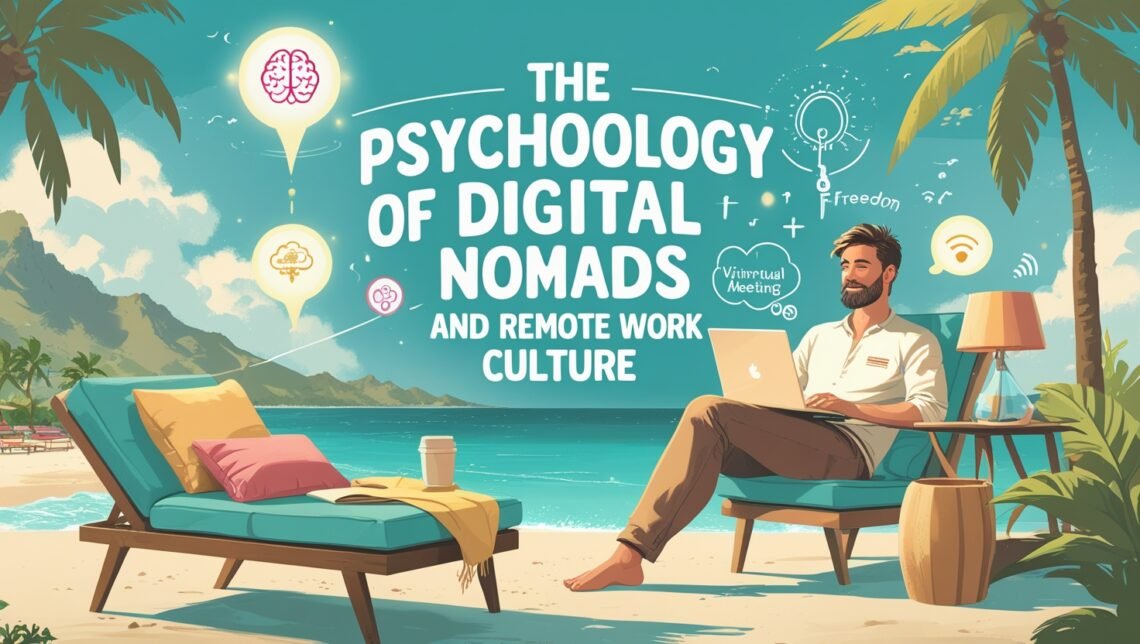
Nowadays, when technology has made everything online and connected, people are leaving traditional office jobs and adopting remote work and a digital nomad lifestyle. A digital nomad is a person who works from anywhere in the world with just a laptop and internet connection, and because of this freedom, many people are getting attracted to this. Earlier, people used to think that a fixed office and 9 to 5 job were only a part of a career, but now the new generation has proved that the way of working can also be flexible. This trend has changed the entire work culture, but it is not just limited to travel and freedom. There are many psychological factors behind it, too, which need to be understood. When a person does not stay at one place, his routine, environment, and social circle change repeatedly, which has an impact on his mind.
The trend of remote work became even stronger after the pandemic, when companies realized that it is possible to work from home, but it has its pros and cons. On one hand, one gets freedom and self-control, on the other hand, maintaining discipline and work-life balance is also a challenge. Therefore, in this blog, we will see what impact the digital nomad lifestyle has on the human mind and how people manage their psychological challenges so that they remain successful and mentally healthy in this new work culture.
Freedom vs. Isolation: Psychological Trade-offs:
The biggest advantage of being a digital nomad is that you get complete freedom. You can work from anywhere, from a coffee shop, the beach, or another country. This freedom is a dream for many people because they stay away from traditional office politics and can make their schedule. But this freedom has another aspect which people often ignore. When you change your place frequently or work alone, the risk of isolation and loneliness is reduced. When you are in the office, you have colleagues around you. There is always a break for gossip and small talk, which humans do.
It keeps the person socially connected, but this is missing in the digital nomad lifestyle. Often, people enjoy this isolation initially, but after some time, they start to feel socially disconnected. This can also lead to anxiety or depression. According to psychology, human beings is a social creatures and they need connection. Therefore, it is very important to create a balance between freedom and isolation. Some people bridge this gap by joining online communities or co-working spaces so that they get freedom, and the burden of isolation is also reduced. It is important for every new digital nomad to understand this trade-off so that they do not compromise their mental health and can take advantage of their work freedom.
Productivity and Motivation in Remote Environments:
The biggest challenge while working remotely is that no boss or manager is seeing you daily. Therefore, it is up to the individual to maintain productivity and motivation. When you are working from home or a random place, there are a lot of distractions. Sometimes it is the issue of wifi, sometimes the environmental noise, and sometimes the tension of changing the place while travelling. In all this, it becomes difficult to focus on work. Psychology says that discipline and self-motivation are the most important skills in a remote work culture. Many people are initially excited to work from home or work while travelling, but when the routine gets established, they face procrastination. Digital nomads get distracted and start missing deadlines, so digital nomads should learn time management and work planning
A dedicated workspace should be created, whether it is at home or in a co-working space, so that the brain gets the signal that now it is time to work To maintain motivation, goals should be broken into small breaks and a self-reward system should be created so that if today’s work is done, then enjoy something Apart from this, it is also important to take breaks so that there is no burnout Psychologists also suggest that remote workers should write down their daily routine and stick to it so that their mind is clear and productivity remains high When motivation and productivity go together, the fun of remote work also doubles and the stress also doubles it also happens less.
The Role of Community and Co-working Spaces:
Community and co-working spaces are very important in the digital nomad lifestyle. When a person is working away from home, they naturally start feeling lonely. The best way to overcome this loneliness is through co-working spaces. These are shared offices where different people sit together and work. Here, people network together, exchange ideas, and sometimes even create new projects. Apart from this, online communities are also very helpful, where digital nomads take advice from each other, seek support, and sometimes even do virtual coffee chats. These connections keep the person mentally fresh and relieve work-related stress. They also work.
The benefit of community is that if someone faces difficulty in doing something, other people help them, and the feeling of isolation is reduced. Some cities are also famous for digital nomads, where there are dedicated co-working hubs, like Bali, Chiang Mai, Lisbon, etc. In these cities, all kinds of support are available, and new friends are also made. Community and co-working spaces create a healthy routine where there is a balance between work and social life So, if you are a digital nomad, definitely become a part of the community so that you stay mentally strong and socially connected.
Mental Health Challenges and Coping Strategies:
Remote work and the digital nomad lifestyle sound very exciting, but there are some mental health challenges associated with it. The most common issues are burnout, anxiety, and work-life imbalance. When you do not manage your routine properly, you are rarely able to work. Due to this, there is no time for rest, and gradually the person feels mentally exhausted. One also becomes a victim of anxiety because new people come to the new city, and there is no stability due to movement all the time, and financial pressure also sometimes gives stress. The solution to these problems is that the person should take care of their mental health.
Self-awareness is important first in coping strategies, you must know when you are getting burnout or feeling anxiety After that, you should use tools like mindfulness meditation and digital detox Create a healthy routine that includes proper sleep, exercise, and a balanced diet If needed, it’s also good to seek professional help Some people benefit a lot from online therapy or counselling sessions Another good strategy is to talk to a trusted friend or family and share your stress The most important thing in remote work is that you set your boundaries so that work and personal life don’t mix If you follow all these steps, you can fully enjoy the digital nomad lifestyle by keeping your mental health strong.
Conclusion:
Today is the era of a connected world where technology has made everything possible. Becoming a digital nomad is no longer just a dream; many people have made it a reality. But to be successful in this journey, just a laptop and the internet are not enough. First of all, you need to understand your psychological needs. Along with the enjoyment of freedom, you also have to face isolation, loneliness, and mental health challenges, but if you plan, these problems can be easily handled. Becoming a part of the community, using co-working spaces, taking regular breaks, and managing your productivity are also very important.
To keep mental health strong, coping strategies should also be used, such as mindfulness therapy and social connections. It is also very important to understand work-life balance at times, so that you do not ignore anything from work and personal life. If all these things are implemented correctly, then the digital nomad lifestyle becomes not just a dream but a fulfilling reality. The message of this conclusion is simple: if you understand your needs and use the right tools, you can grow in a remote work culture, stay mentally healthy, and also enjoy travelling the world. This is the greatest gift of the modern connected world, which gives us a life with flexibility and independence. it gives a new perspective.
FAQs:
Q1: What is a digital nomad and why is this lifestyle becoming popular?
A digital nomad is someone who works remotely from anywhere in the world with just a laptop and an internet connection. This lifestyle has become popular because it offers freedom from the traditional 9-to-5 office setup. Many people want the flexibility to travel, choose their own work environment, and avoid office politics. Advances in technology and the shift to remote work after the pandemic have made this lifestyle more accessible and realistic for people worldwide.
Q2: What psychological challenges come with the freedom of remote work?
While the biggest benefit of being a digital nomad is freedom, it also brings challenges like isolation and loneliness. In a traditional office, you have colleagues, social interactions, and casual conversations that help you feel connected. Working alone or constantly changing locations can make people feel disconnected, which sometimes leads to anxiety or depression. Psychology shows that humans need social interaction, so it’s important for digital nomads to find ways to stay connected and maintain a balance between freedom and community.
Q3: How can digital nomads stay productive and motivated without a boss watching them?
Remote work demands strong self-discipline and self-motivation because there’s no manager supervising you daily. Distractions like poor wifi, travel stress, or noisy environments can reduce focus. To stay productive, digital nomads need time management skills and a clear routine. Creating a dedicated workspace, breaking work into smaller tasks, setting realistic goals, and using a self-reward system can help maintain motivation. Regular breaks and a written daily plan also keep the mind clear and help prevent procrastination and burnout.
Q4: What role do community and co-working spaces play for remote workers?
Communities and co-working spaces are essential for overcoming loneliness and staying socially active. Co-working spaces allow digital nomads to work alongside others, network, and share ideas, which keeps them mentally fresh and reduces stress. Many cities have become hubs for digital nomads with shared offices and social networks, like Bali or Lisbon. Online communities also help by offering support, advice, and virtual meetups. Being part of a community ensures that digital nomads maintain a healthy work-life balance and don’t feel isolated.
Q5: How can digital nomads protect their mental health while working remotely?
Remote work can lead to burnout, anxiety, and work-life imbalance if not managed well. To protect mental health, digital nomads should practice self-awareness and notice early signs of stress. Mindfulness, meditation, digital detoxes, and a healthy routine with proper sleep, exercise, and nutrition are important. Talking to friends, seeking online therapy, or joining support groups can help too. Setting clear work boundaries so that work and personal life don’t mix is crucial. By following these strategies, digital nomads can enjoy their freedom while staying mentally strong.