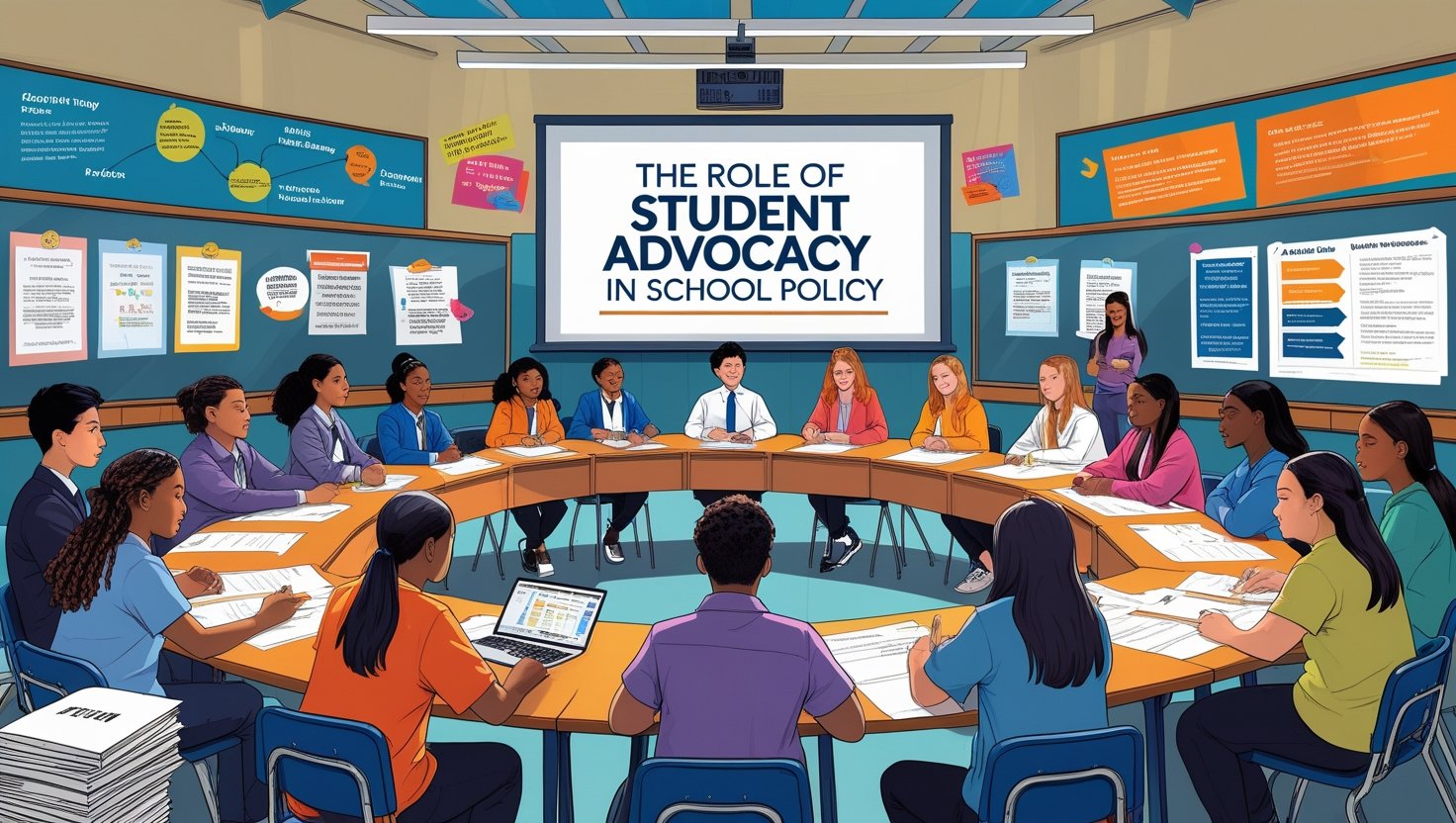
Every school’s mission is not only to design a syllabus and exams. Whenever creating a better society for living, but if the polices of the school are only created by the principals and teachers or and administrators, students will not participate in policy-making, so the system will remain incomplete.
The meaning of student advocacy is students raising their voices and highlighting the issues they are facing in their learning process, because in this era, the student is not only in the role of learning, but they are play a vital role in decision making for polices. They are now the stakeholders who understand their surroundings and play a role in the betterment of their environment.
When one student raises their voice on any particular issue or demands a support program so he is not only demanding for their own but are also for the betterment of their whole school system. It is essential that educational institutions don’t just listen to student voices, but take them seriously. When a student feels that his or her voice matters, his or her confidence increases, leadership skills develop, and the school environment becomes inclusive. This introduction is important so that we understand that the role of student advocacy is not just an option, but a necessity within every school.
2. Understanding Student Advocacy:
The real meaning of student advocacy is that students raise their voices on their own behalf for their rights or raise their voices on behalf of their fellows, so they openly support one another’s issues or changes in the rule book of schools on a specific rule to create a healthy environment for students. Advocacy is the basic right of students, be they a class monitor or a common student.
A simple example of this could be that if they are not getting proper food in the school canteen, then the students start a petition and demand healthy options from the administration. Or if a student is being subjected to unfair behavior, then other students come together in his support.
Advocacy is not just about raising a voice; it also means creating an impact. For this, students have to do research, explain their point with finesse and logic, and sometimes even formally talk to the school authorities. When students express their perspective confidently, they not only solve their problems but also make their school culture democratic. It is important to understand that advocacy is not rebellion but rather part of the constructive dialogue that every school needs.
3. How Student Advocacy Shapes School Policies:
When students raise their voices, they directly impact school policies. There are examples in many schools where students got a rule changed or new programs introduced. For example, some students campaigned for mental health awareness, and the school arranged counseling sessions. Similarly, flexibility was introduced in dress code policies in many places when students pointed out that some rules were outdated or discriminatory.
This process is not always easy, but when students are organized, there is logic in their words, and they talk respectfully to the administration, it is possible to make changes. Student councils or representative groups are also a part of this, through which students raise their voices for their peers. Policies should not be made from the perspective of adults alone, because students are the ones who are affected by those rules. Policies become more relevant and practical when they are directly involved. It is important to understand that school rules are for the students, so students have a right and a need to participate in the making of those rules. When this culture develops, school becomes a shared space where everyone’s voice is heard.
4. Benefits of Including Students in Policy Discussions:
When students are taking part in policy-making discussions so the effect will not be limited to their feelings but also its impacts on the whole school environment.
The first benefit is that they thought their voices had value in the sight of the school administration, which helps to boost their self-confidence.
The second benefit is that a sense of responsibility is developed in their mind because when they are part of policy-making, they will help in the implementation of policy in their schools.
The third benefit is that teachers and administrators will discover the new perspectives that are often do not know.
Students are in the ground reality, they know what is creating issues. When policies are based on students’ feedback, their acceptance level also increases because students consider it their own. This process is inclusive, where everyone is made an equal partner. Such a culture makes the school not only democratic but also more effective and harmonious. When students feel that they are not just followers of the rules but also their designers, they are more motivated to follow the school’s norms and values. This builds mutual trust, which is fundamental for every successful school.
5. Barriers to Student Advocacy and How to Overcome Them:
As important as student advocacy is, implementing it can be difficult.
The first barrier is resistance from adults. Many teachers and principals feel that students are immature and should not be taken seriously.
Another issue is that students do not have platforms where they can share their ideas or concerns. In some schools, student councils exist just in name and have no real power.
The third barrier is fear; many students keep quiet, thinking that they might be punished for their views. The first step to overcoming these barriers is for school leadership to change its mindset.
They must view these students as collaborators, not just followers. Second, these students must be formally trained so they can learn to present their arguments with decency and data. They must be taught public speaking, negotiation, and respectful communication. Third, these schools must have clear and safe mechanisms for students to raise their voices, like feedback boxes, regular meetings, or online suggestion forms. When these things are in place, barriers gradually break down and advocacy becomes easier. In this process, both support and understanding are required.
6. Conclusion:
If schools are to be truly inclusive and future-ready, they must be designed with students, not just for them. When students are active participants in a school’s decision-making rather than just a passive part of it, the system becomes more powerful and responsive. This is not just a theoretical idea but a practical strategy that has proven successful in many schools around the world. Student advocacy not only challenges unfair policies but also comes up with new solutions that the administration may not have even considered. This develops a culture of dialogue, trust, and collaboration, and these three things are the foundation of any successful institution.
Ultimately, if we want students to become responsible citizens, we must give them opportunities for leadership and advocacy from now on. This is their right as well as our responsibility. Therefore, the time has come to stop running schools only on a top-down model and make students equal partners in that process. Only then will we be able to build schools that are truly for everyone.
FAQs:
1. What is student advocacy and why is it important in schools?
Student advocacy means students raising their voices for their rights or on behalf of their peers to improve their learning environment. It is important because it empowers students to actively participate in shaping school policies, boosts their confidence, and helps schools become more inclusive and democratic.
2. How does student advocacy influence school policy-making?
When students express their concerns or suggest improvements, it can directly impact school policies. For example, changes to dress codes, the introduction of mental health programs, or improvements in cafeteria food have often come from student-led initiatives. Their feedback ensures that policies reflect the actual needs of the students.
3. What are the benefits of including students in school policy discussions?
Including students fosters a sense of responsibility, boosts their confidence, and provides school authorities with firsthand insight into real student issues. Policies created with student input are more likely to be accepted and followed because students feel ownership over them.
4. What challenges do students face in advocating for change, and how can these be overcome?
Common barriers include resistance from adults, lack of proper platforms, and student fear of punishment. These can be overcome by changing adult mindsets, offering advocacy training to students, and creating safe, structured systems (like feedback boxes or open forums) for students to share concerns.
5. Why should schools shift from a top-down model to a more inclusive one with student participation?
A top-down model often overlooks student perspectives. By involving students as equal partners, schools become more responsive, fair, and effective. This prepares students for active citizenship, encourages leadership, and strengthens the school’s overall environment through collaboration and mutual trust.