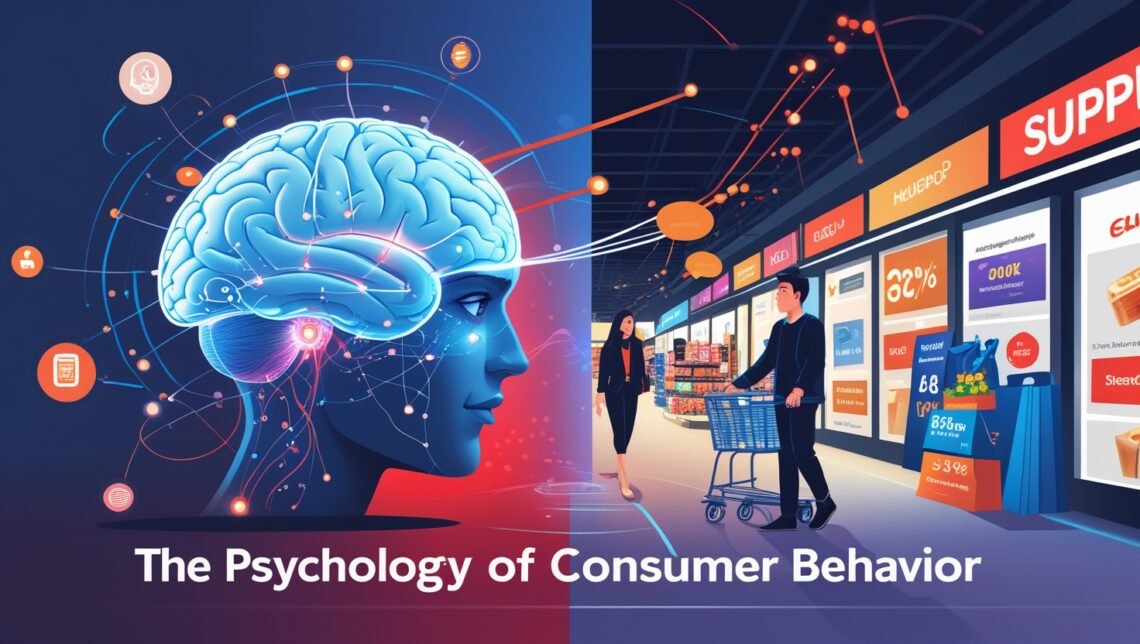
Consumer behaviour means what people buy, why they buy, when and how they buy. It is a psychological process in which emotions, needs, desires, and social factors work together. When a person buys a product or service, he does not just look at the price or quality; but many other things are going on in his mind. It is important for marketing experts to understand what psychological mindset their customers are making decisions. With this understanding, businesses can personalize their marketing strategies, which can increase their sales. When a customer looks at a product, he first identifies his need or problem, then evaluates options, and then makes his decision.
But this entire process is greatly influenced by emotions, social influence, and brand perception. The purpose of understanding consumer behavior is not just to sell a product but to build a relationship in which there is a feeling of trust and value. When brands understand people’s emotional and psychological needs, they win their loyalty. Therefore, every marketer needs to deeply understand the mental process of the consumer. This knowledge not only makes their marketing campaigns effective but also helps consumers to be more mindful in their decisions. In today’s era, where choices are many, understanding consumer psychology has become the key to success.
Emotions and Impulse Buying – The Power of Feelings:
When we shop, not every decision is based on logic. Often, it happens that we buy things without planning, just because we are emotional at that time. This is called impulse buying. When a person is happy, he shops to give a reward; when he is sad, he shops to improve his mood. This is the result of emotions that make us spend money without thinking. Marketers have understood this very well. That’s why their advertising campaigns are emotional sometimes, there is a message of happiness, sometimes of sadness, and sometimes a connection is shown. All these emotions touch the heart of the consumer, and he gets attracted to the product. When we are in a mall or shopping online, the offers, colours, sounds, and visual appeals tempt us.
Sometimes limited-time deals, sometimes “just for you” messages, all these tactics trigger us emotionally. The biggest challenge for emotional buyers is that there is regret afterwards. But at that time, the decision is emotional and not logical. Therefore, it is important to understand how emotions shape our buying habits. If we understand our emotions, impulse buying can be controlled. It is also important for brands to market responsibly so that the consumer’s trust is maintained and they do not feel manipulated.
Social Influence – How Society Shapes Our Choices:
Humans are social creatures, and society has a very deep impact on their lives, especially when it comes to purchases. We often think that the things we are buying are our own choices, but in reality, they belong to others. The opinions of our family, friends, coworkers, and social media influencers deeply affect our purchasing decisions. When we see that a product has been endorsed by a celebrity or a friend has used and liked it, we are naturally drawn in that direction. This is a psychological phenomenon called “social proof”.
People usually like to buy things that become a trend in society. Fashion, gadgets, and food choices are all influenced by social influence. Even if a product is new but has good reviews, and people’s feedback is positive, then our trust in that brand increases. For this reason, marketers take great advantage of social media influencers and peer reviews.
Even social pressure forces people to buy. Sometimes we buy something just to think what people will think if we do not follow that standard. This is the need of social validation, which plays a very big role in decision-making. To match our identity and status, we adjust our purchasing choices according to the norms of society.
Brand Perception and Identity – Buying What Reflects Us:
When we buy a product, it is often not just a part of necessity, but it also represents our personality and identity. Brand perception means what people feel about a brand and its value in their eyes. When a brand represents a particular lifestyle or image, people consider it not just a product but a means of expression.
For example, if a person considers himself stylish and modern, he will choose the brands that support that image. Similarly, environmentally conscious people prefer brands that are eco-friendly and sustainable. All this is a part of brand perception. When a brand successfully builds its identity, it leaves an impact on people’s minds, and they feel an emotional attachment towards that brand.
For people, the brand is also a symbol of trust. A brand with a good reputation seems more reliable, and the customer buys it without much thinking. For this reason, companies highlight their story, values , and mission in marketing so that people see their brand as a feeling and not just a product. When a brand matches a person’s values, status, and lifestyle, they automatically become a loyal customer of that brand. In this way, branding psychology has a very deep impact on buying behavior.
Scarcity and Urgency – The Fear of Missing Out (FOMO):
FOMO i.e., “Fear of Missing Out,” is a psychological tactic that forces people to make quick decisions. When a product or offer is described as limited, such as “only for today”, “limited stock”, or “3 pieces left”, then the person’s mind becomes active, and he thinks that if he does not buy it now, he will not get it later. This is the effect of urgency and scarcity, which leads the consumer towards impulse buying.
Companies have used this technique a lot in marketing. Flash sales, countdown timers, and exclusive deals all create this psychological pressure. When people see that others are also buying the same thing, they are further motivated to buy it now. This concept is also called herd mentality, in which people make their decisions by looking at the actions of others.
FOMO not only creates demand for the product but also brings urgency and stress in the mind of the consumer, which prevents them from thinking logically. Often, people say after thinking that they did not need it, but at that time, they felt that if they left it, then the chance would have been lost.
This strategy is effective for short-term sales, but if misused, it can erode customer trust. Therefore, it is important to understand how scarcity and urgency are affected and how we can improve our buying decisions by understanding them.
Conclusion:
Understanding the psychology of consumer behavior is important not just for marketers but for every consumer. When we understand why we buy things emotions, social pressure, branding or FOMO, we can make our decisions more conscious and mindful.
Often, we buy a product in the heat of the moment without thinking and later realize that we did not need it. This happens when we do not understand the psychological forces hidden behind our actions. If we every time before shopping just think whether we need it or not, and why we are purchasing it, then many unnecessary expenses can be controlled.
Similarly, marketers also have an ethical responsibility to offer meaningful products and services by understanding people’s needs and emotions rather than simply luring them. When both consumers and businesses act by understanding psychology, the market environment becomes healthier and trustworthy.
Today’s informed consumer makes their decisions by balancing both logic and emotions. Understanding Psychology is a powerful tool that can help us not only in shopping but also in every kind of financial decision.
FAQs:
1. What is consumer behavior and why is it important to understand?
Consumer behavior is the study of how people decide what to buy, why they buy it, and when or how they make those purchases. It involves psychological, emotional, and social factors. Understanding consumer behavior is important because it helps marketers tailor their strategies effectively and also helps consumers make more thoughtful and informed decisions.
2. How do emotions influence our buying decisions?
Emotions play a major role in purchasing decisions. Often, people buy products impulsively when they are happy, sad, or stressed. This is called impulse buying. Brands use emotional marketing—such as feel-good ads or limited-time offers—to trigger emotional responses and drive sales. Understanding these emotional triggers helps both consumers control spending and brands market responsibly.
3. What role does society play in shaping our purchase choices?
Society influences our buying decisions through family, friends, trends, and social media influencers. People often buy things to fit in with social groups or trends. This is called social proof. Sometimes people also purchase items under social pressure or for social validation, not necessarily personal need. That’s why brands focus heavily on peer reviews and influencer marketing.
4. How does brand perception affect consumer loyalty?
Brand perception refers to how a consumer views and emotionally connects with a brand. When a brand reflects a person’s values, lifestyle, or identity—like being eco-friendly or trendy—they are more likely to feel loyal to it. A strong, trustworthy brand image helps people choose the product more confidently and repeatedly, without overthinking.
5. What is FOMO and how does it impact buying habits?
FOMO, or “Fear of Missing Out”, is a tactic that creates urgency and pressure to buy quickly. Limited-time deals, countdowns, and phrases like “only 3 left” make people worry they’ll miss out, pushing them to make impulse purchases. While effective for quick sales, it can lead to regret and mistrust if overused. Understanding FOMO helps consumers shop more wisely and calmly.